Strap Latches may look simple, but a poor choice can leave a lid rattling, a case difficult to open, or equipment exposed to vibration. Selection matters wherever access panels, storage boxes, and transport cases must stay securely closed. Grand View Research estimated the global industrial fasteners market at USD 90.6 billion in 2023, with continued growth projected through 2030. This broad market is not a direct measure of latch demand. Still, it shows how much industrial work depends on reliable fastening components.
A useful latch should match the job, not just the product photo. Consider the load, mounting surface, operating frequency, and exposure to moisture or dust. Check the strap material, adjustment range, buckle design, and hardware finish. A latch that feels sturdy on a workbench may behave differently on a vibrating machine or a frequently opened enclosure. Details matter.
And real installations can be messy.
The right choice balances secure closure with practical access. It should also fit the available mounting space and remain manageable for the person using it. Before buying, inspect product specifications and ask the supplier about rated loads and environmental limits. Do not assume that similar-looking models perform alike. These seven tips will help compare Strap Latches with greater care, while leaving room for an honest reality: specifications cannot replace testing the latch in its intended setup.
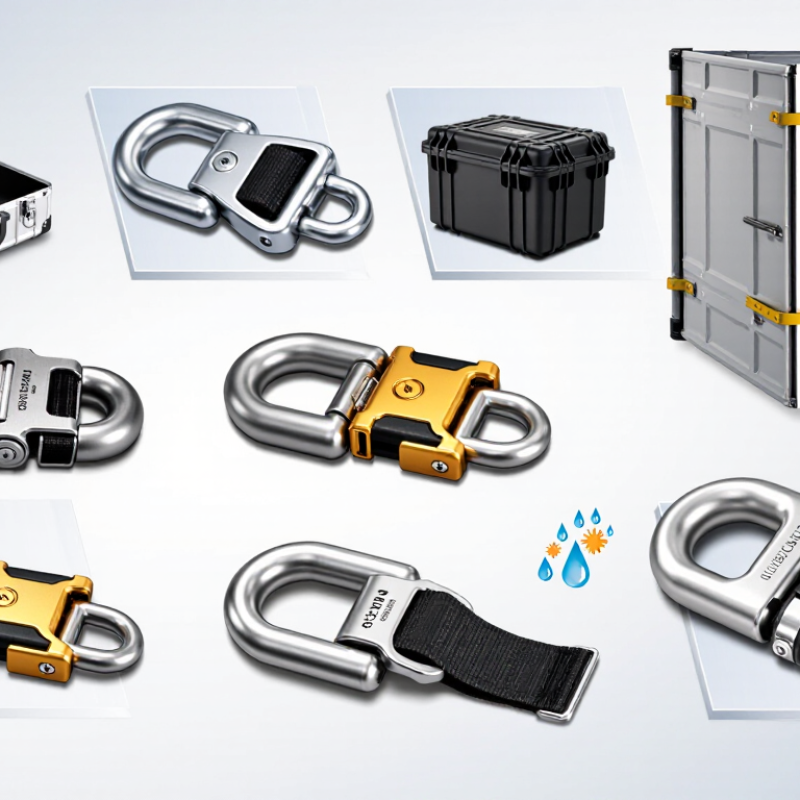
Strap latches use tension to hold panels, lids, or equipment in place, but their designs suit different jobs. Over-center latches pull a strap tight and lock with a lever. They work well on tool cases and access panels that need frequent opening. Ratchet-style latches provide finer tension control for heavier loads. Cam-buckle designs are quicker to release, though they may not hold as firmly under vibration. Small differences matter.
Match the latch to the movement and conditions it will face. A storage-box lid may need only a simple, hand-operated latch. A machine cover that vibrates may need a locking feature and a strap that resists loosening. For outdoor equipment, check whether the strap and hardware tolerate moisture and temperature changes. Measure the available mounting space, too; a strong latch is useless if its lever hits a nearby wall.
Check the load rating and follow the maker’s installation guidance. Uneven mounting can twist a strap, wear its edges, or make tension unreliable. Feel for sharp corners where the strap bends. It is tempting to tighten everything as much as possible, but excess force can strain the strap or distort a lid. A small test under realistic conditions often reveals what a specification sheet cannot. The right choice depends on the actual setup.
| Tip | Strap Latch Type | How It Works | Typical Applications | Main Advantage | Selection Consideration |
|---|---|---|---|---|---|
| 1. Match the latch to the required holding force. | Over-center draw latch with a flexible strap | A lever pulls the strap tight and passes over center to maintain tension. | Equipment covers, access panels, cases, and enclosures that need a firm closure. | Provides repeatable tension and quick operation. | Check the latch’s rated capacity and the strength of its mounting points; do not infer capacity from appearance alone. |
| 2. Choose an adjustable buckle for variable loads. | Cam-buckle strap | A spring-loaded cam grips the webbing; pressing the release lets the strap slide for adjustment. | Light-duty cargo tie-downs, bundled materials, and removable covers. | Easy to adjust and release without a separate tool. | Suitable for lighter-duty securing than many ratchet systems. Follow the stated working-load limit and avoid over-tightening. |
| 3. Use a ratchet style when greater tension is needed. | Ratchet strap latch | A ratcheting handle winds webbing around a spindle to increase tension. | Securing cargo on vehicles or trailers when the strap and anchor points are appropriately rated. | Allows controlled tightening with mechanical advantage. | Use the strap’s working-load limit, not its breaking strength, when planning a tie-down. Protect webbing from sharp edges. |
| 4. Consider quick access for frequently opened closures. | Hook-and-loop strap closure | Hook and loop surfaces press together and separate when peeled apart. | Cable bundles, lightweight covers, removable organizers, and reusable wraps. | Fast to open and close, with no rigid buckle required. | Holding ability can be affected by dirt, wear, moisture, and peel forces; it is not a substitute for a rated cargo restraint. |
| 5. Select stretch only when compliance is useful. | Elastic or rubber strap latch | A flexible strap stretches over a catch, hook, or retaining point and returns toward its original length. | Lightweight lids, tarpaulins, outdoor equipment, and closures that need some movement. | Accommodates small changes in distance and can absorb vibration. | Elastic materials can age or lose tension through exposure and repeated stretching. Inspect regularly and keep clear of snap-back paths. |
| 6. Check strap material against the environment. | Webbing strap latch | A woven textile strap is secured using a buckle, lever, or other compatible latch. | Cases, protective covers, equipment restraints, and general-purpose fastening. | Flexible, lightweight, and available in different widths and materials. | Consider abrasion, UV exposure, moisture, temperature, and chemical contact; choose a material rated for the conditions. |
| 7. Verify fit, anchors, and release access before buying. | Fixed-length or adjustable strap latch | The strap connects two points; length adjustment, end fittings, and latch style determine how it fits and releases. | Replacement closures, storage boxes, machinery guards, and custom assemblies. | A correctly sized assembly can improve fit and make operation more convenient. | Measure the required strap length and attachment spacing, confirm compatible end fittings, and ensure the latch remains accessible after installation. |
Safety note: Strap latch capacity depends on the complete assembly, including the strap, latch, stitching, fittings, and anchor points. Use products within their marked ratings and inspect them for damage before use.
