Top Touch Screen Manufacturers for Global Buyers

Choosing a reliable touch screen manufacturer requires more than comparing prices or browsing impressive product photos. Global buyers must examine glass quality, touch sensitivity, brightness, durability, and production consistency. A screen that works perfectly in a showroom may fail under sunlight, gloves, moisture, or continuous industrial use.

Jeff Han, a pioneer of multi-touch technology, described the concept clearly: “The basic idea behind this is that you can manipulate digital content directly with your hands.” That direct interaction now supports medical equipment, retail kiosks, vehicle displays, factory panels, and consumer electronics. However, successful integration depends on more than the display itself. Buyers should review cover-glass strength, bonding methods, operating temperature, interface options, testing records, and after-sales support.

This guide examines leading touch screen manufacturers serving international customers. It considers manufacturing capacity, customization experience, certification practices, delivery reliability, and application expertise. Sample inspection matters. So does communication.

No ranking is flawless. Supplier data can change, and regional service quality may vary. Some manufacturers appear strong on technical specifications but respond slowly during prototype revisions. Others offer excellent engineering support but require higher minimum orders. These weaknesses deserve attention, not concealment. The most dependable choice is usually the manufacturer that matches the buyer’s environment, volume, budget, and risk tolerance. A clear comparison can help purchasers avoid costly redesigns, fragile panels, and delayed launches.
Top Touch Screen Manufacturers for Global Buyers

Touch Screen Technology and Its Role in Global Device Manufacturing

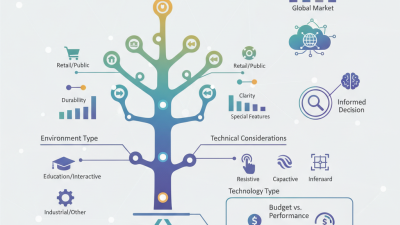
Touch screens have become a control layer for phones, medical equipment, vehicles, and factory systems. They translate a finger, stylus, or gloved hand into precise electrical signals. In global device manufacturing, this interface affects usability, enclosure design, and production cost. Projected capacitive technology suits most modern consumer devices because it supports multi-touch and thin structures. Resistive panels remain useful where operators need gloves, pressure input, or strict contamination control.

For factory panels, small details matter. A buyer should ask about cover-glass thickness, surface hardness, brightness, and touch sensitivity. Optical bonding can reduce internal reflections under strong warehouse lighting. It may also improve shock resistance. However, bonding can increase repair difficulty and raise manufacturing costs. Testing needs context. A panel that works perfectly in a clean office may fail beside water spray, dust, vibration, or electrical noise.

Reliable manufacturers should provide sample data, process controls, and clear inspection records. Samples should face repeated touches, temperature changes, humidity, and drop tests before mass production. Engineers should measure response time across the entire active area, not only at the center. I would also examine connector placement and replacement procedures, because a minor layout decision can delay field service. The mistake is treating the display as a simple component. Cost alone misleads. A lower quote may hide weaker coatings, unstable supply, or inconsistent calibration between production batches. Personally, I find transparent failure reporting more valuable than impressive specifications.

Touch Screen Technology and Its Role in Global Device Manufacturing

Quarterly global smartphone shipments illustrate the scale of touchscreen-enabled device manufacturing. Smartphones remain one of the largest applications for capacitive touch technology, influencing sensor materials, cover glass, display integration, and production capacity worldwide.

Data: Worldwide smartphone shipments by quarter in 2024, rounded to the nearest million units. Source: IDC Worldwide Quarterly Mobile Phone Tracker. Smartphones are a major touchscreen-enabled device category.

Key Criteria for Evaluating Touch Screen Manufacturers

Top Touch Screen Manufacturers for Global Buyers

When evaluating touch screen manufacturers, start with performance in real operating conditions. Request samples with dry fingers, gloves, and light moisture. Check touch accuracy near the corners, not only at the center. A display that responds quickly on a desk may behave differently inside a vehicle or medical device.

Ask for measurable data, including brightness, viewing angle, surface hardness, response time, and operating temperature. Confirm whether the manufacturer controls optical bonding, cover glass processing, sensor assembly, and final testing. Strong suppliers provide inspection records, calibration methods, and traceable batch numbers. They should also explain their quality system and relevant safety or electromagnetic compatibility certifications. Vague answers deserve caution.

Production capability matters as much as engineering skill. Review sample consistency across several batches, not just one attractive unit. Discuss tooling ownership, minimum order quantities, spare parts, and expected service life. A clear change-control process can prevent unexpected component substitutions. I have found that communication speed often reveals more than a polished presentation. Still, this is not a perfect rule. Smaller factories may offer excellent engineering but lack mature documentation. Larger factories may document everything while responding slowly to design problems. Ask for independent test reports, customer references, and a realistic pilot order before committing. Factor in packaging, export experience, repair procedures, and response time across time zones.

Major Types of Touch Screen Manufacturers and Their Product Focus

Top Touch Screen Manufacturers for Global Buyers

Major touch screen manufacturers typically fall into four groups: panel makers, controller specialists, module integrators, and custom industrial suppliers.

Panel manufacturers focus on projected capacitive, resistive, infrared, or surface acoustic wave technologies. Their priorities include sensitivity, optical clarity, durability, and production volume.

Controller specialists develop touch ICs and firmware, which influence response time, glove operation, and water rejection.

Module integrators combine panels with cover glass, displays, optical bonding, and protective coatings.

MarketsandMarkets reported that the global touch screen market was valued at approximately USD 81.8 billion in 2023 and could reach USD 116.5 billion by 2028. This growth reflects demand from vehicles, medical equipment, factory terminals, retail systems, and consumer electronics.

Buyers should examine more than screen size.

A factory panel may need a thick glove mode, wide temperature tolerance, and resistance to oils. A medical interface may require easy cleaning, sealed edges, and stable operation near moisture. Small details matter.

Custom industrial suppliers often provide sunlight-readable displays, anti-glare surfaces, metal housings, and long-term replacement support. Display Supply Chain Consultants has also identified automotive and larger-format display applications as important growth areas.

However, market categories overlap. Some suppliers outsource controllers or glass, making “manufacturer” an imperfect label.

Buyers should verify test reports, sample performance, warranty terms, and annual production capacity before approving a supplier.

A polished sample can still hide weak bonding or inconsistent calibration. That is easy to miss.

Regional Strengths and Global Supply Capabilities

Top Touch Screen Manufacturers for Global Buyers

Regional strengths often shape touch screen supply more than product brochures suggest. East Asian manufacturers usually offer dense component networks, automated glass processing, and fast tooling support. Their advantage becomes clear when buyers need custom sizes, narrow bezels, or high-volume production. In contrast, manufacturers in Europe and North America often emphasize engineering documentation, industrial testing, and specialized interfaces for medical, transport, and factory equipment. Regional expertise matters.

Supply capability requires more than factory capacity. A reliable manufacturer should provide stable material sourcing, traceable batches, and realistic lead-time updates. During supplier evaluations, buyers can request sample reports, dimensional records, optical test results, and packaging photographs. I have found that small details reveal operational maturity. For example, a supplier that labels each carton clearly can reduce receiving errors across several warehouses. However, regional advantages are not absolute. A technically strong factory may still struggle with holiday shutdowns, port congestion, or limited after-sales staff. This is where dual sourcing can protect a project, although it increases qualification costs and communication workload.

Touch performance also depends on the final environment. A kiosk near a sunny window needs different optical treatment from a handheld device used with gloves. Buyers should discuss temperature ranges, humidity exposure, impact resistance, and controller compatibility before approving samples. Some specifications look impressive but lack field evidence. That deserves careful questioning. Reliable partnerships grow through factory audits, pilot orders, transparent corrective actions, and regular production reviews.

How Global Buyers Select the Right Touch Screen Supplier

Top Touch Screen Manufacturers for Global Buyers

How Global Buyers Select the Right Touch Screen Supplier

Global buyers rarely select a touch screen supplier by price alone. They compare performance, documentation, production stability, and support. Grand View Research estimated the global touch screen display market at USD 75.8 billion in 2022. Its report also forecasts an 8.6% compound annual growth rate through 2030. That expansion increases supplier choices, but it also raises sourcing risks. Promises are cheap.

A serious evaluation starts with application testing. Ask suppliers to demonstrate accuracy with gloves, moisture, and a 1-millimeter stylus tip. Check response time after repeated touches, not only during a showroom demonstration. Review optical clarity, cover-glass thickness, operating temperatures, and expected service life. For industrial equipment, request evidence from electrostatic discharge testing under IEC 61000-4-2. Samples can mislead.

Reliable suppliers provide traceable inspection records, material declarations, and corrective-action reports. Buyers should verify compliance with RoHS, REACH, and destination-market safety requirements. ISO 9001 certification helps, but it does not replace factory audits. Inspect calibration equipment, incoming-material controls, and final testing procedures. MarketsandMarkets identifies durability, interface performance, and application-specific requirements as major purchasing factors in touch technology. Forecasts are not promises. A practical scorecard should include defect rates, tooling ownership, lead-time history, spare-part availability, and escalation contacts. I still distrust perfect scorecards; real projects contain trade-offs, delayed feedback, and occasional redesigns.

Top Touch Screen Manufacturers for Global Buyers - How Global Buyers Select the Right Touch Screen Supplier

A practical comparison framework based on touch technology, product capability, qualification requirements, and international sourcing considerations.

Supplier Capability Typical Technology or Specification Common Product Range Key Buyer Evaluation Criteria Best-Fit Applications Typical Qualification Evidence Global Buyer Priority
Projected Capacitive Touch Multi-touch operation using a glass or film sensor; supports finger input and, in selected designs, glove or passive-stylus input. Small handheld displays through large-format industrial and public-interactive panels. Touch accuracy, cover-glass thickness, glove performance, moisture rejection, latency, optical clarity, and controller compatibility. Industrial control panels, medical equipment, kiosks, point-of-sale terminals, automotive displays, and consumer electronics. Touch test reports, environmental test results, controller documentation, sample approval, and production consistency records. Very High
Resistive Touch Pressure-based touch sensing, commonly available in 4-wire and 5-wire constructions; works with a finger, glove, stylus, or tool. Small and medium displays, including legacy equipment and rugged operator interfaces. Actuation force, surface durability, transparency, calibration stability, stylus compatibility, and resistance to dust or liquids. Factory machinery, process control, medical instruments, laboratory equipment, and legacy embedded systems. Actuation-life testing, abrasion testing, calibration data, ingress testing, and compatibility samples. High for specialized equipment
Infrared Touch Optical beams around the display perimeter detect touch interruption without a touch sensor layer on the viewing surface. Medium to very large interactive displays and multi-user installations. Frame width, sunlight performance, dust management, multi-touch capability, installation tolerance, and cleaning requirements. Education displays, meeting-room systems, digital signage, public kiosks, and large collaborative screens. Ambient-light testing, multi-touch test results, calibration procedure, enclosure drawings, and field-installation guidance. High for large displays
Surface Acoustic Wave Touch Ultrasonic waves travel across the glass surface and are interrupted by a touch object. Medium and large displays requiring high optical clarity and a glass-only touch surface. Water and contaminant sensitivity, surface durability, optical transmission, touch-object requirements, and maintenance conditions. Public information terminals, ticketing systems, gaming equipment, and commercial interactive displays. Surface contamination tests, optical measurements, durability data, installation instructions, and application samples. Medium for controlled environments
Automotive-Grade Supply Touch modules designed for vibration, temperature cycling, sunlight exposure, and long service life. Instrument clusters, center displays, rear-seat displays, and vehicle control interfaces. Operating temperature, optical bonding, anti-glare performance, vibration resistance, electromagnetic compatibility, and traceability. Passenger vehicles, commercial vehicles, agricultural machinery, and specialty transportation systems. Temperature-cycle data, vibration reports, EMC test results, process traceability, and formal change-control procedures. Very High for vehicle programs
Medical-Grade Supply Touch displays engineered for frequent cleaning, reliable operation, clear images, and controlled production processes. Compact diagnostic displays through large clinical and medical workstation screens. Disinfectant resistance, optical performance, glove operation, cleanability, electrical safety integration, and documentation quality. Patient monitoring, ultrasound systems, laboratory analyzers, surgical equipment, and medical carts. Chemical-resistance testing, cleaning-cycle data, risk-management records, material declarations, and quality-system documentation. Very High for regulated products
Industrial-Rugged Supply Touch modules with reinforced cover glass, sealed construction options, wide-temperature support, and long-term availability planning. Panel PCs, human-machine interfaces, outdoor terminals, and factory automation displays. Ingress protection, impact resistance, glove usability, sunlight readability, connector robustness, and lifecycle support. Manufacturing, logistics, energy, transportation, outdoor control systems, and harsh-environment automation. Ingress and impact test reports, temperature testing, lifetime estimates, failure-analysis process, and reliability records. Very High
Optical Bonding Capability Air-gap, OCA, or OCR bonding between the touch module, cover glass, and display to reduce reflections and improve readability. Custom bonded assemblies from compact displays to large-format modules. Haze, reflectance, bubble rate, bonding uniformity, rework policy, thermal expansion control, and sunlight readability. Outdoor displays, automotive systems, medical equipment, industrial HMIs, and premium commercial devices. Optical measurement reports, bonding process controls, environmental-cycle testing, sample inspection, and defect criteria. High
Customization and Engineering Custom sensor patterns, cover-glass shapes, printed borders, mounting structures, cables, controllers, and firmware tuning. Application-specific touch panels and integrated display assemblies. Engineering response time, drawing control, prototype speed, tooling ownership, firmware support, and design-for-manufacturing capability. New product development, specialized instruments, smart appliances, kiosks, and OEM equipment. Technical drawings, prototype records, engineering-change notices, validation plans, and first-article inspection reports. High for OEM projects
Quality and Compliance Management Documented inspection, process control, incoming-material verification, traceability, and corrective-action procedures. Applicable to standard modules, custom products, and high-volume production programs. Defect-per-million targets, audit access, lot traceability, warranty handling, corrective-action speed, and change notification. All industries, especially regulated, safety-critical, and long-lifecycle products. Quality certificates, inspection plans, audit reports, nonconformance records, material declarations, and reliability data. Essential
International Logistics and Support Export packaging, multilingual technical support, documentation control, spare-unit planning, and regional service coordination. Prototype shipments, scheduled production deliveries, replacement modules, and after-sales support. Lead-time reliability, packaging validation, customs documentation, forecast flexibility, spare-parts availability, and response time. Global OEM programs, distributed service networks, and products sold across multiple regions. Packaging test results, delivery records, shipping documents, service-level procedures, and escalation contacts. High