2026 Top Digital Display Screen Trends You Should Know?
As we approach 2026, the digital display screen industry continues to evolve rapidly. Recent studies from ResearchAndMarkets project a compound annual growth rate (CAGR) of 12% in this sector over the next few years. Such statistics highlight the significance of digital display screens in various applications, from advertising to information dissemination. Industry expert Dr. Sarah Thompson emphasizes this trend, stating, “The future of marketing relies heavily on effective digital display screens.”
These screens are transforming retail and corporate environments. Brands are integrating advanced technologies, such as AI and interactive displays, to engage consumers better. However, the implementation of these innovations presents challenges. Many businesses grapple with balancing quality and cost in digital display screen solutions. With the remarkable rise in demand, retailers must carefully assess their strategies to stay competitive.
As we explore the top trends in digital display screens for 2026, it’s essential to acknowledge both the opportunities and hurdles that lie ahead. Companies must remain adaptable. Understanding consumer behavior and technological advancements will be crucial for navigating this dynamic landscape.
Emerging Technologies in Digital Display Screens for 2026
The digital display screen market is evolving rapidly, driven by emerging technologies that will shape its future in 2026. According to a recent industry report, the global market for digital signage is expected to reach $31.71 billion by 2026. This growth indicates a robust demand for innovative display solutions across various sectors.
One major trend is the integration of AI and machine learning into display systems. These technologies help in content personalization, improving user engagement. For instance, AI can analyze viewer demographics in real time, adjusting the displayed content accordingly. This level of adaptation raises questions about privacy and data handling, which the industry must address.
Additionally, advancements in OLED and microLED display technologies promise enhanced image quality and energy efficiency. OLED screens offer deep blacks and vibrant colors, making them ideal for high-end retail environments. However, their higher production costs raise concerns about accessibility for smaller businesses. As technology progresses, balancing quality with affordability will become a critical challenge.
With these trends on the horizon, the digital display screen industry faces both exciting opportunities and significant obstacles. Ensuring reliability and transparency in these new technologies will be essential for fostering consumer trust and meeting market demand.
Integration of AI and Machine Learning in Display Solutions
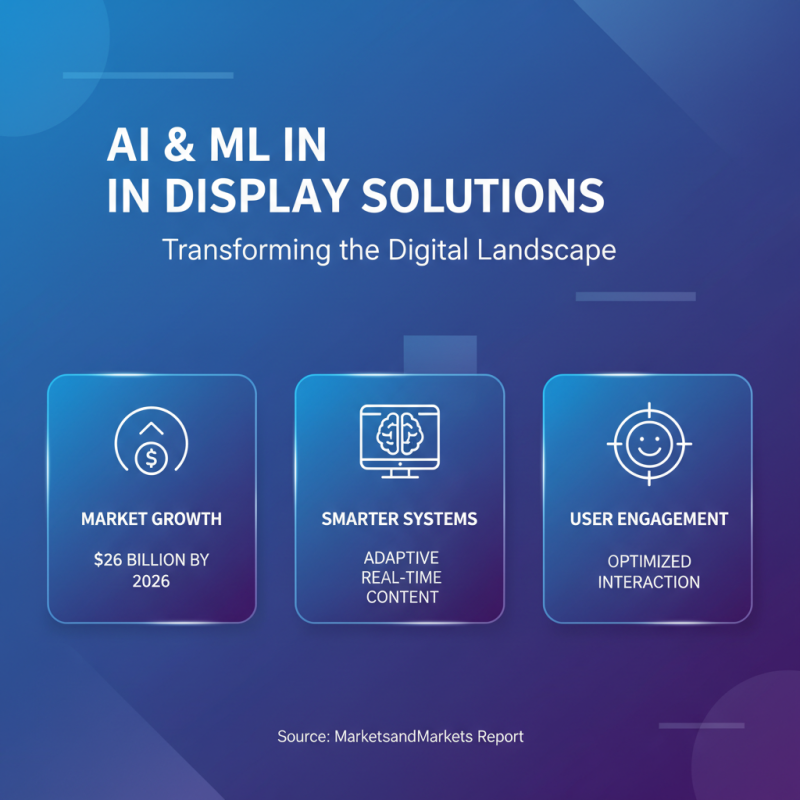
The integration of AI and machine learning into display solutions is transforming the digital landscape. According to a recent report by MarketsandMarkets, the AI market in display technology is expected to grow to $26 billion by 2026. This growth indicates a shift towards smarter, more responsive display systems. AI enables screens to adapt content in real-time, optimizing user engagement.
For instance, predictive analytics allows digital signage to tailor messages based on audience behavior. This personalization can enhance customer experiences significantly. However, implementation is not without challenges. Many companies face difficulties in data integration and analysis. A study by Deloitte shows that 65% of businesses struggle to leverage data effectively in their display strategies. This gap suggests a need for ongoing training and strategic planning.
Moreover, machine learning algorithms require constant refinement. They must adapt to evolving user preferences. While AI-driven displays promise improved interaction, they also pose risks of dependency on technology. A balance between innovation and human insight remains critical. Industry leaders must reflect on these developments while embracing the potential of AI-integrated displays.
Sustainable Materials and Eco-Friendly Practices in Displays
The rise of digital display screens is increasingly intertwined with the need for sustainability. Eco-friendly practices are becoming vital in the industry. A report by **Grand View Research** shows that the global market for eco-friendly displays is expected to grow by 20% annually through 2026. This reflects a shift towards sustainable materials that reduce environmental impact.
Manufacturers are exploring biodegradable plastics and recycled materials. These innovative approaches not only minimize waste but also enhance user experience. Reports indicate that displays made from sustainable materials can reduce energy consumption by up to 30%. This is significant, considering that displays contribute to substantial energy use worldwide.
Despite these advancements, challenges remain. The adoption of sustainable practices can lead to increased production costs. This makes it difficult for manufacturers to balance profitability and environmental responsibility. Consequently, the industry must address these trade-offs. The transition to greener materials and practices is essential, but it is accompanied by hurdles. The commitment to sustainability must be continuous and carefully managed.
Trends in Display Screen Interactivity and User Engagement
Interactive display screens are transforming user engagement across various sectors. According to a report by Future Market Insights, interactive displays are projected to reach a market value of $40 billion by 2026. This is driven by a surge in demand for immersive experiences in retail, education, and entertainment.
User engagement is becoming more complex and demanding. Reports indicate that 78% of consumers prefer interactive displays for information over static options. Engaging features, like touch technology and augmented reality, are pivotal. They enhance participation, making experiences memorable. Companies that implement these interactive systems see up to 30% increases in customer satisfaction.
However, not all interactive implementations succeed. Poorly designed user interfaces can lead to frustration. A study by Nielsen Norman Group highlights that 65% of users abandon an interactive display if it's not intuitive. This emphasizes the importance of usability testing. Constant feedback loops and adjustments are crucial for maximizing the effectiveness of interactive displays. Engaging users may require ongoing refinements, which adds to operational complexities.
Advancements in Resolution and Image Quality for Future Displays
Advancements in display technology are shaping the future of visual experiences. A key focus is improving resolution and image quality. Ultra-high-definition (UHD) displays are becoming more common. These screens provide detailed images that captivate users. The introduction of 8K resolution is pushing the limits further. However, 8K content is still scarce, making its adoption a bit tricky.
High dynamic range (HDR) technology plays a crucial role as well. It enhances the contrast and color accuracy of images. This means brighter whites and deeper blacks. Yet, not all HDR displays deliver the same level of quality. Users need to do careful research. Calibration also varies widely among devices, affecting visual output.
Another area worth mentioning is microLED technology. It offers incredible brightness and color reproduction. But this technology isn't widely available yet. The production costs remain high, limiting accessibility. Users may find it expensive to upgrade to the latest advancements. Balancing quality with cost is a challenge in this rapidly evolving sector. Somehow, this landscape calls for adaptability and critical evaluation.
2026 Top Digital Display Screen Trends
This chart illustrates the predicted adoption rates for various digital display technologies by 2026. As seen, HDR Capability is expected to lead the trends, with notable interest in 4K and OLED technologies as well.